
Beyond DNA Polymerase: FDA Approves Pritelivir, a New Class of HSV Inhibitors
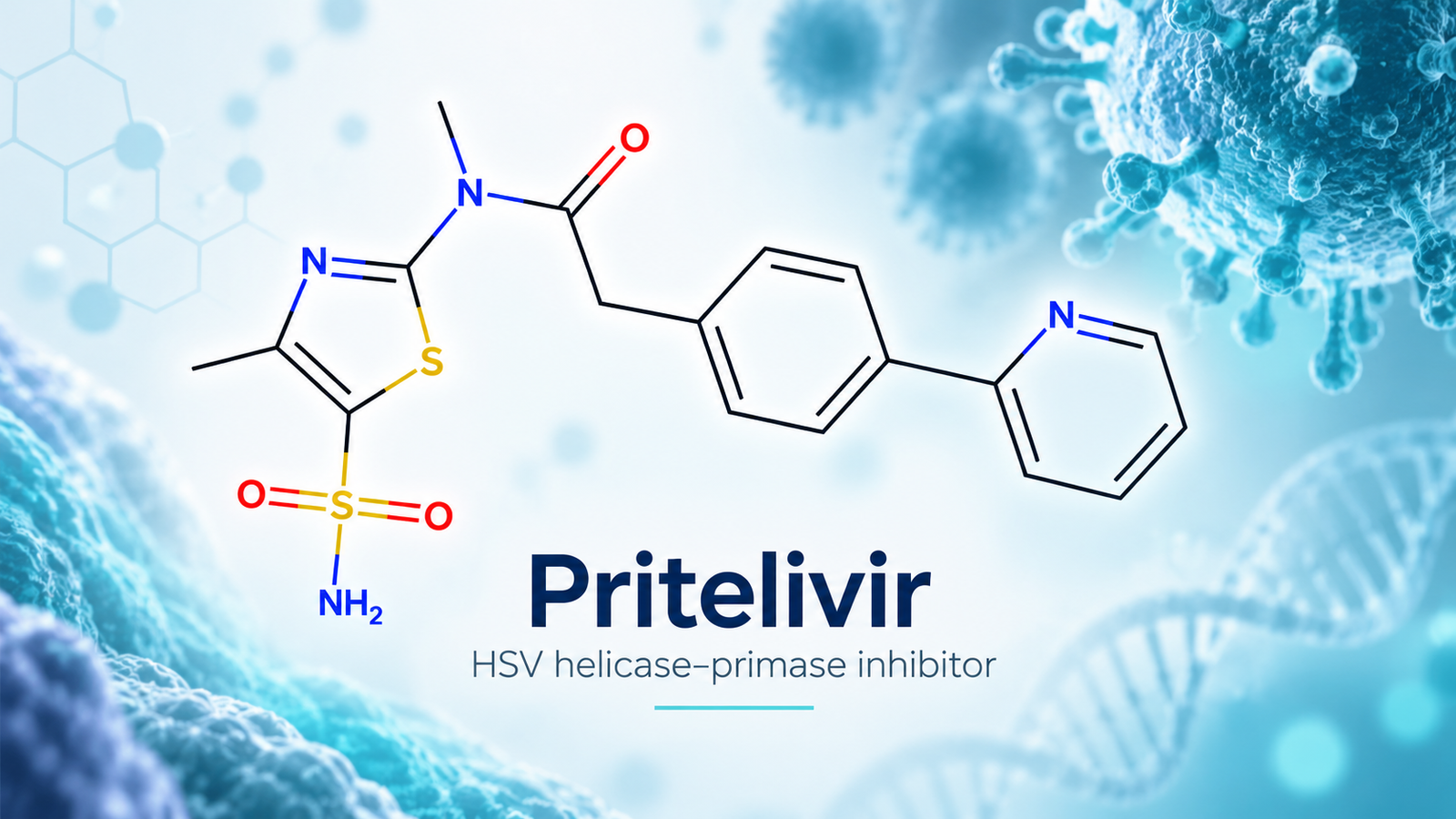
On October 9, 2026, the FDA approved HOVILPRI (pritelivir), an oral helicase–primase inhibitor developed by AiCuris, now part of Asahi Kasei Therapeutics. The drug is indicated for immunocompromised adults with mucocutaneous HSV-1 or HSV-2 infections that have failed to respond to conventional antiviral therapy.
It marks the first FDA approval of an HSV treatment with a new mechanism of action in nearly three decades.
A New Target in a Familiar Virus
For decades, acyclovir and related nucleoside analogues have formed the backbone of HSV treatment. Their activity depends on phosphorylation by viral thymidine kinase, followed by inhibition of viral DNA polymerase.
This dependence also creates a vulnerability: mutations affecting viral thymidine kinase can render these drugs ineffective.
Pritelivir bypasses this mechanism entirely.
Instead of targeting DNA polymerase, it inhibits the viral helicase–primase complex, composed of UL5, UL8, and UL52 proteins. This molecular machinery is responsible for unwinding viral DNA and initiating its replication.
Pritelivir is a non-nucleoside inhibitor that does not require activation by viral thymidine kinase. By interrupting a different step in viral DNA replication, it can retain activity against HSV strains resistant to conventional nucleoside analogues.
The innovation is therefore not simply an improvement in potency. It is the introduction of a different molecular intervention into a replication process that has been therapeutically targeted for decades.
From Molecular Innovation to Clinical Benefit
The Phase III PRIOH-1 study demonstrated the clinical relevance of this approach in a particularly challenging patient population.
Complete lesion healing by Day 28 was achieved in:
- 63% of patients treated with pritelivir
- 34% of patients receiving investigator-selected alternative therapy
The difference was statistically significant (p = 0.0047).
According to the official announcement by Asahi Kasei Therapeutics, pritelivir offers a non-intravenous treatment option for immunocompromised adults with refractory HSV infections.
Expanding the Antiviral Target Landscape
The approval of pritelivir illustrates a significant shift in antiviral development: overcoming resistance not by modifying an established drug class, but by targeting an entirely different viral protein complex.
The helicase–primase complex had long been recognized as essential for HSV replication. Pritelivir demonstrates that this alternative biological target can be successfully translated into an approved small-molecule therapy.
After nearly 30 years without an FDA-approved HSV drug featuring a fundamentally new mechanism, pritelivir opens a new chapter in the treatment of resistant herpesvirus infections.
Sometimes, overcoming resistance requires more than optimizing the molecule. It requires changing the target.
References
- FDA (October 9, 2026).FDA Approves Drug to Treat Lesions Caused by Herpes Simplex Virus.
- Asahi Kasei Therapeutics (October 13, 2026).FDA Approval of HOVILPRI (pritelivir) Tablets.
- Birkmann A. et al. (2022).Discovery, Chemistry, and Preclinical Development of Pritelivir, a Novel Treatment Option for Acyclovir-Resistant Herpes Simplex Virus Infections. Journal of Medicinal Chemistry, 65, 13614–13628.