
Clinical Advances in Targeted Protein Degradation: CNS LRRK2 Degradation and BTK Combination Therapy
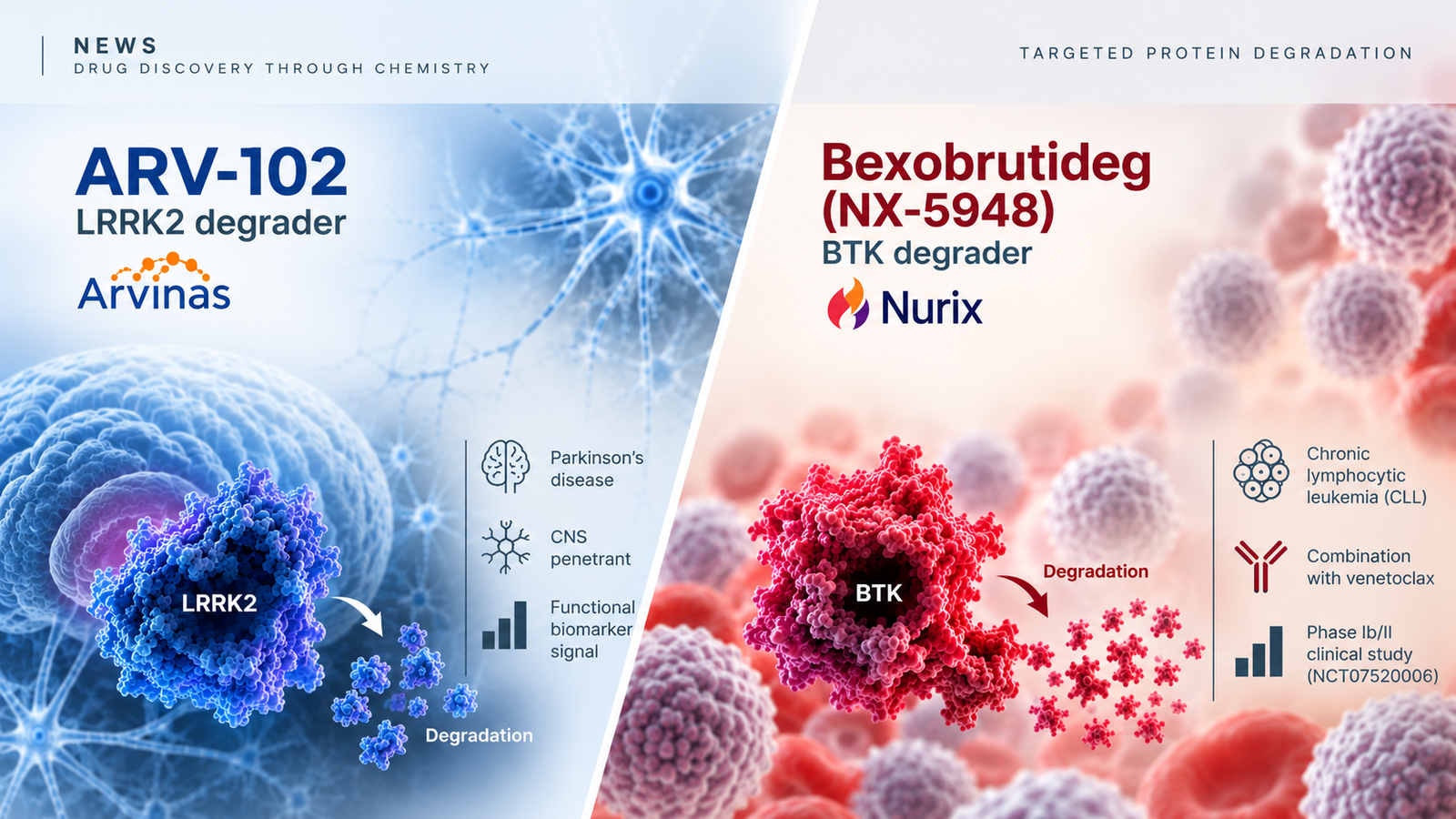
ARV-102: Linking CNS Target Degradation to Functional Biomarkers
At MDS 2026, Arvinas presented Phase I results for ARV-102, an orally administered, blood–brain barrier-penetrant PROTAC targeting leucine-rich repeat kinase 2 (LRRK2).
The randomized, placebo-controlled study evaluated 20–80 mg daily doses over 28 days in 24 patients with Parkinson’s disease.
Treatment was associated with dose-dependent improvements in saccadic hypometria, reductions in cerebrospinal fluid (CSF) biomarkers related to endolysosomal dysfunction and neuroinflammation, and increases in markers of synaptic integrity.
Importantly, reductions in CSF LRRK2 protein levels correlated with changes in both molecular biomarkers and oculomotor function.
These findings provide preliminary evidence linking CNS target degradation to downstream biological and functional responses. From a drug discovery perspective, they support the feasibility of developing orally bioavailable heterobifunctional degraders with sufficient CNS exposure to achieve measurable pharmacodynamic effects.
However, the small sample size, short treatment duration, and exploratory nature of the functional assessments preclude conclusions regarding clinical efficacy.
Bexobrutideg: Evaluating BTK Degradation in Combination with BCL2 Inhibition
Nurix Therapeutics has initiated patient enrollment in NX-5948-203 (NCT07520006), a Phase Ib/II study evaluating the oral BTK degrader bexobrutideg (NX-5948) in combination with venetoclax in chronic lymphocytic leukemia.
Unlike occupancy-based BTK inhibitors, targeted degradation removes the protein, potentially eliminating both kinase-dependent and kinase-independent signaling functions.
Combining BTK degradation with BCL2 inhibition provides a mechanistically complementary strategy aimed at improving antitumor responses and exploring fixed-duration treatment regimens.
The study will assess safety, tolerability, and clinical activity, with potential expansion to anti-CD20 antibody combinations. No efficacy results from this combination have yet been reported.
These developments address two distinct challenges in targeted protein degradation: establishing pharmacodynamic–functional relationships in the CNS and integrating protein degraders into rational combination therapies.
Both programs remain investigational, but their clinical evaluation may help define the therapeutic applications and limitations of targeted protein degradation.
References
- Arvinas. Phase 1 Study of ARV-102, a PROTAC LRRK2 Degrader, in Parkinson’s Disease: Oculomotor and Biomarker Data. MDS Congress, October 7, 2026.
- Nurix Therapeutics. First Patient Enrolled in Phase 1b/2 Combination Study of Bexobrutideg in Chronic Lymphocytic Leukemia. October 7, 2026.
- ClinicalTrials.gov. NX-5948-203, NCT07520006.