Skip to content

Scientific Updates

Curated highlights from medicinal chemistry, drug discovery, targeted protein degradation, screening technologies, and emerging therapeutic modalities.

Showing 1–7 of 11
When Degradation Stops, BTK Inhibition Takes Over

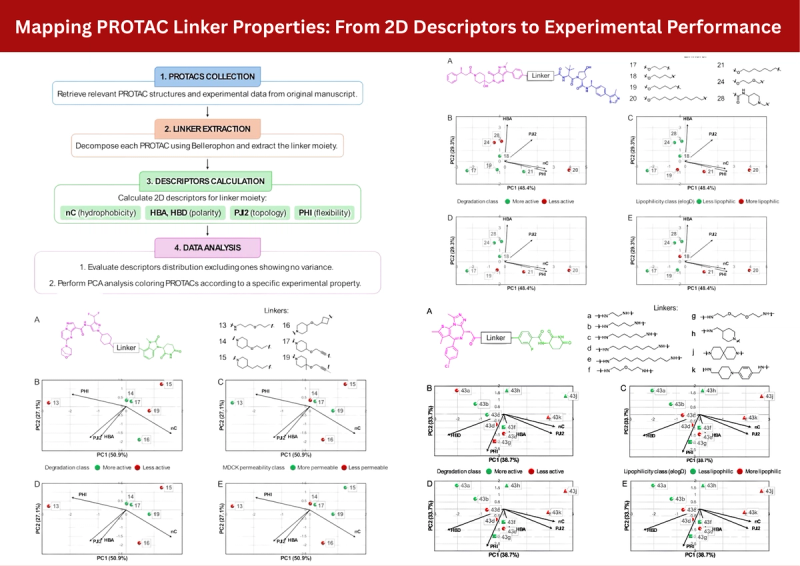
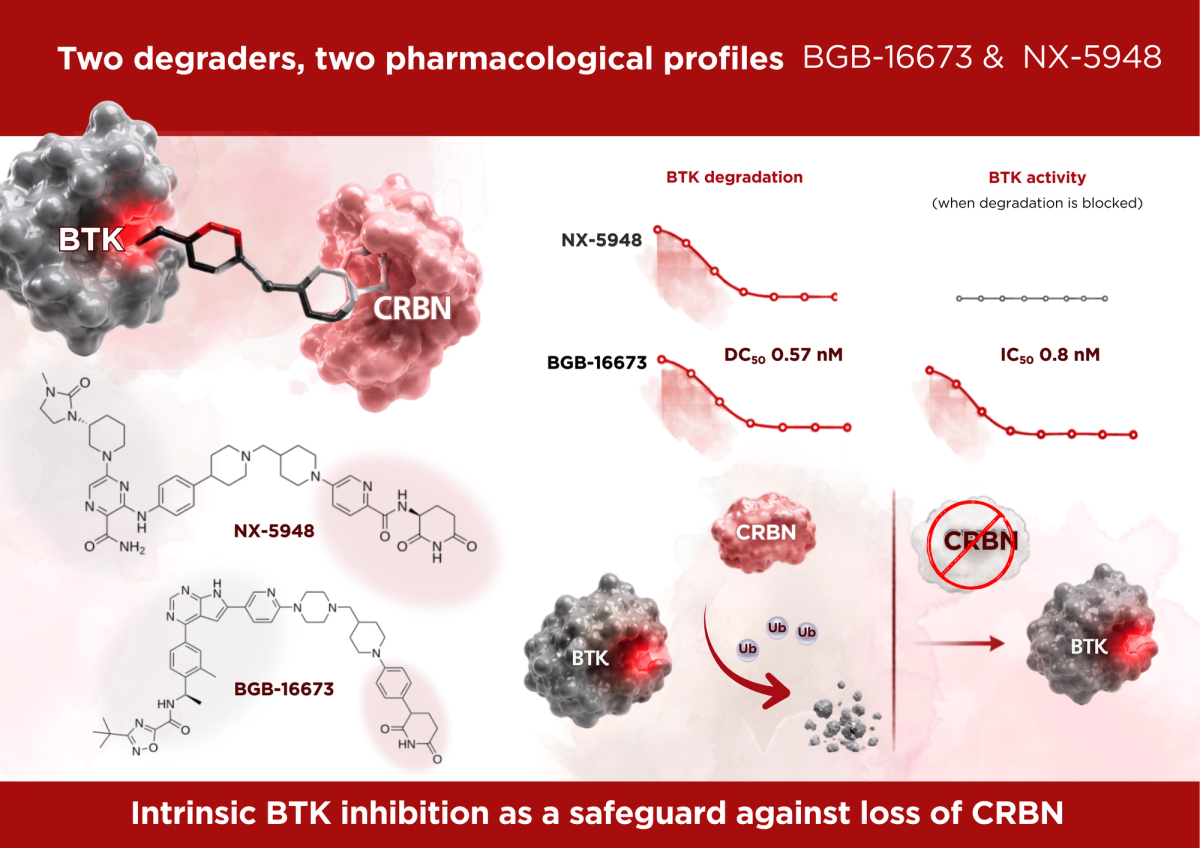
Scientific illustration comparing two BTK degraders, NX-5948 and tacabrutideg (BGB-16673). Both promote CRBN-dependent BTK degradation, but when CRBN function is lost, BGB-16673 retains intrinsic BTK kinase inhibition while NX-5948 loses most of its inhibitory activity.
Targeted Protein DegradationNov 6, 20265 min read

Tacabrutideg (BGB-16673), NX-5948, and what resistance reveals about the design of BTK degraders. Removing a protein and inhibiting its enzymatic activity are not necessarily competing strategies. A recent preclinical study presented in the ASH 2026 abstract collection suggests that combining both mechanisms within a single degrader may provide an advantage when the ubiquitin–proteasome pathway becomes compromised. The study, conducted by researchers at BeOne Medicines, compares tacabrutideg (BGB-16673) with bexobrutideg (NX-5948), developed by Nurix Therapeutics and Roche. Both are cereblon (CRBN)-recruiting BTK degraders, but their intrinsic ability to inhibit BTK kinase activity differs substantially.

Read more

Can a DNA-binding interface become a starting point for covalent drug discovery?

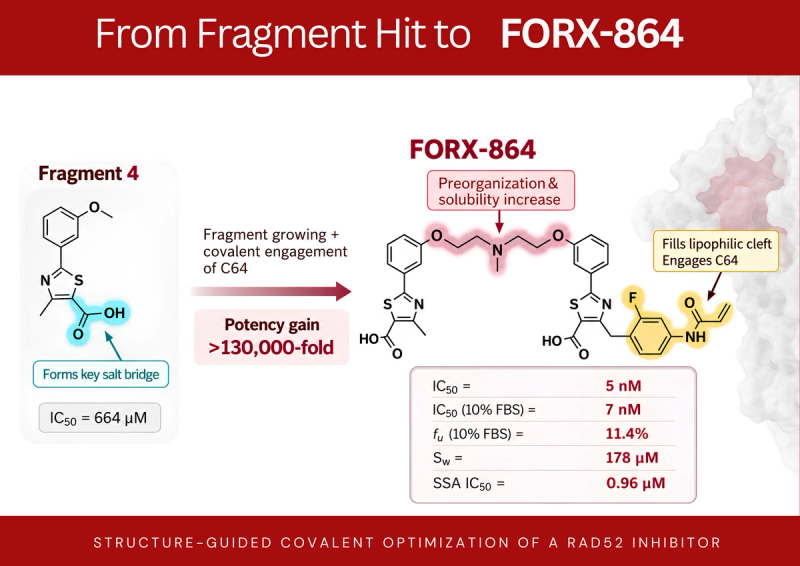
Scientific illustration showing the structure-guided optimization of Fragment 4 into FORX-864, a covalent RAD52 inhibitor. Fragment growing and acrylamide-mediated engagement of Cys64 resulted in a more than 130,000-fold improvement in biochemical potency (IC₅₀: 664 µM to 5 nM). The figure highlights key molecular features, including salt-bridge formation, improved preorganization, and interactions with a lipophilic binding region.
ScreeningOct 26, 20264 min read

Protein–DNA interfaces remain challenging targets for small-molecule drug discovery. A recent JACS study offers an interesting perspective on how covalent chemistry can help overcome some of these limitations. Beyond conventional inhibition, this strategy could inspire new approaches to TPD, particularly for proteins with poorly defined binding pockets. However, molecular polarity, cellular permeability and the compatibility of irreversible target engagement with catalytic degradation remain important challenges. An interesting example of how covalent chemistry can expand the boundaries of druggable protein space. Read our scientific insight for a closer look at the chemistry, its potential applications and remaining questions. https://doi.org/10.1021/jacs.6c16278

Read more

Electrochemical Haloamination for Chiral Aza-BCH Synthesis

Diagram comparing pyrrolidine and azabicyclo[2.1.1]hexane (aza-BCH) bioisosteres, highlighting differences in lipophilicity and aqueous solubility, examples of bioactive aza-BCH derivatives, and asymmetric synthetic strategies using bicyclobutanes versus methylenecyclobutanes for electrochemical cyclization.
Medicinal ChemistryOct 19, 20265 min read

Replacing a pyrrolidine ring with a rigid bicyclic analogue can significantly change a molecule’s shape, conformational freedom, and physicochemical \[properties. Azabicyclo[2.1.1]hexanes (aza-BCHs) are particularly interesting in this context, but their use in medicinal chemistry has been limited by synthetic accessibility, especially when enantiomerically enriched compounds are required. A new study by Kasu, Singha, and Hari from the Indian Institute of Science, published in Nature Communications, introduces an electrochemical route to chiral aza-BCHs from methylenecyclobutanes. The chemistry is interesting for two reasons: it avoids the highly strained bicyclobutanes used in previous asymmetric approaches, and it produces halogenated bicyclic structures that can be further diversified. https://doi.org/10.1038/s41467-026-78484-y

Read more

Start a conversation about your research

Tell us about your project and we will find the right compounds or custom solution.